Agriculture and fresh produce distribution
Hydroponic Herb Grower: Farm-to-Retail Operations Platform
An operations platform we built and maintain for a hydroponic herb grower, replacing manual re-keying of partner sales emails with automatic data import, forecasting and scheduled reporting.
All case studies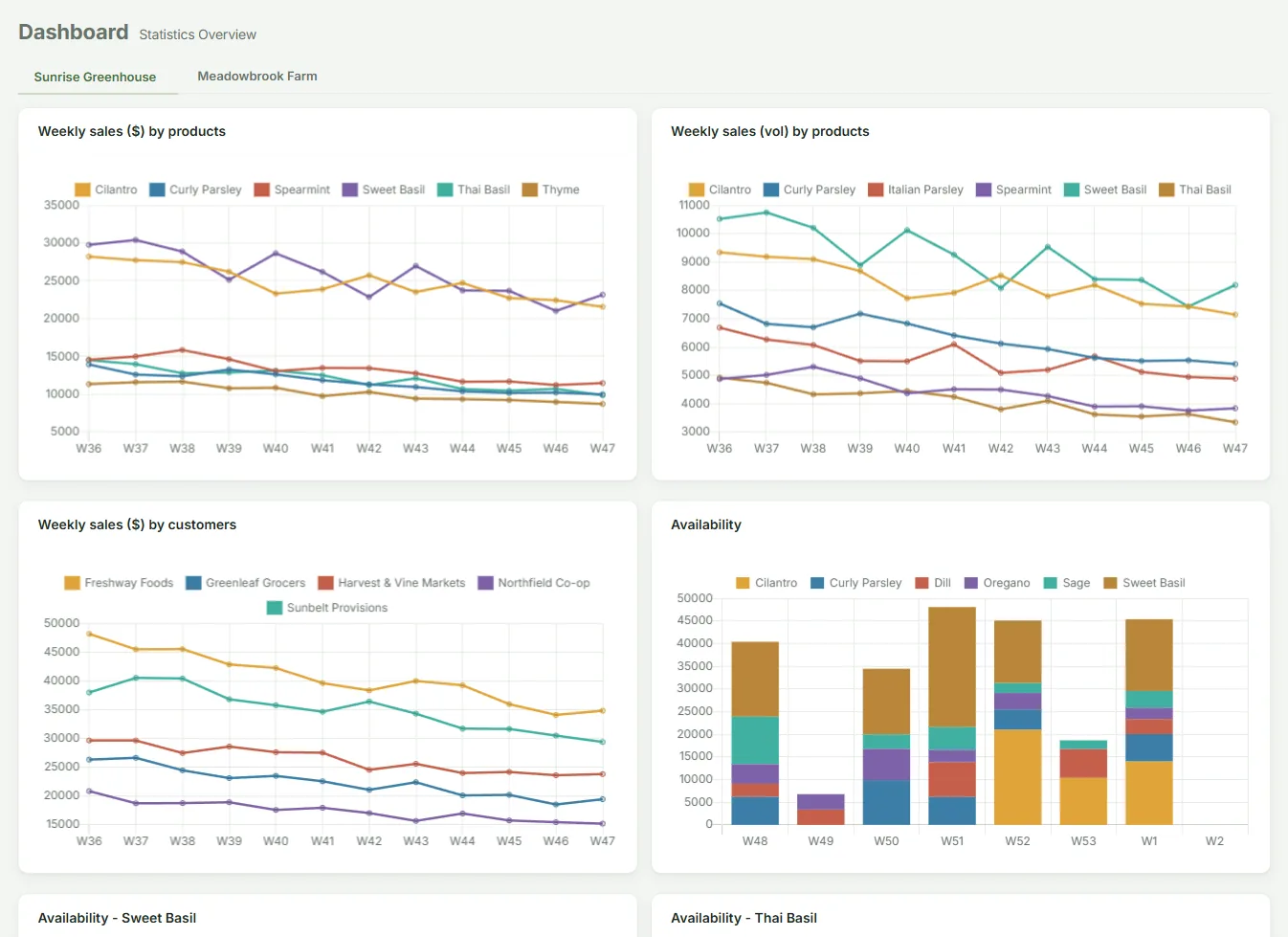
Problem
A hydroponic herb grower supplies retail grocery chains. Running that well means coordinating sowing schedules, greenhouse space, harvest timing, ageing inventory and two delivery channels, direct to store and through distribution centres. Each channel has its own orders and reporting, and the largest grocery accounts expect timely, accurate fill-rate reports.
Much of the daily data arrived as emailed sales reports from distribution partners. Staff read each email and typed the figures into the system by hand, so reporting to retail accounts and planning ahead depended on that manual work being done correctly and on time.
What we built
One system covers the whole cycle from greenhouse to retail account.
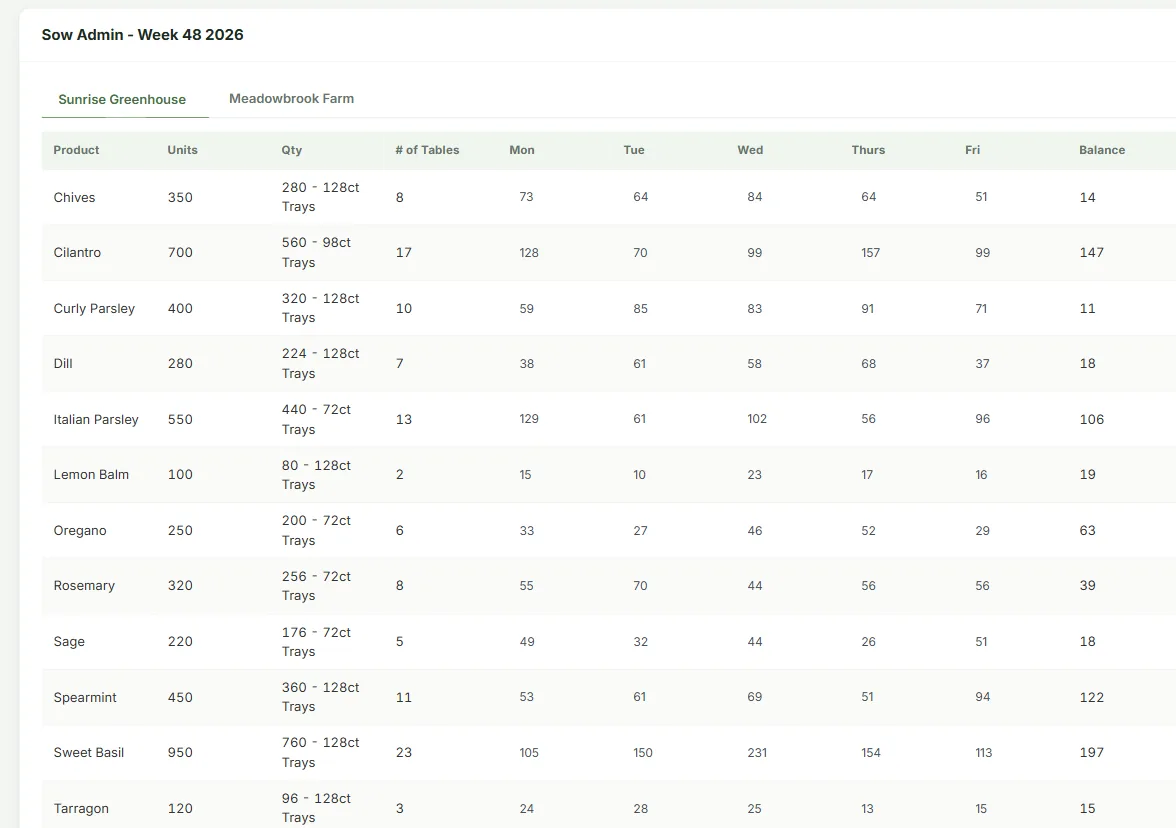
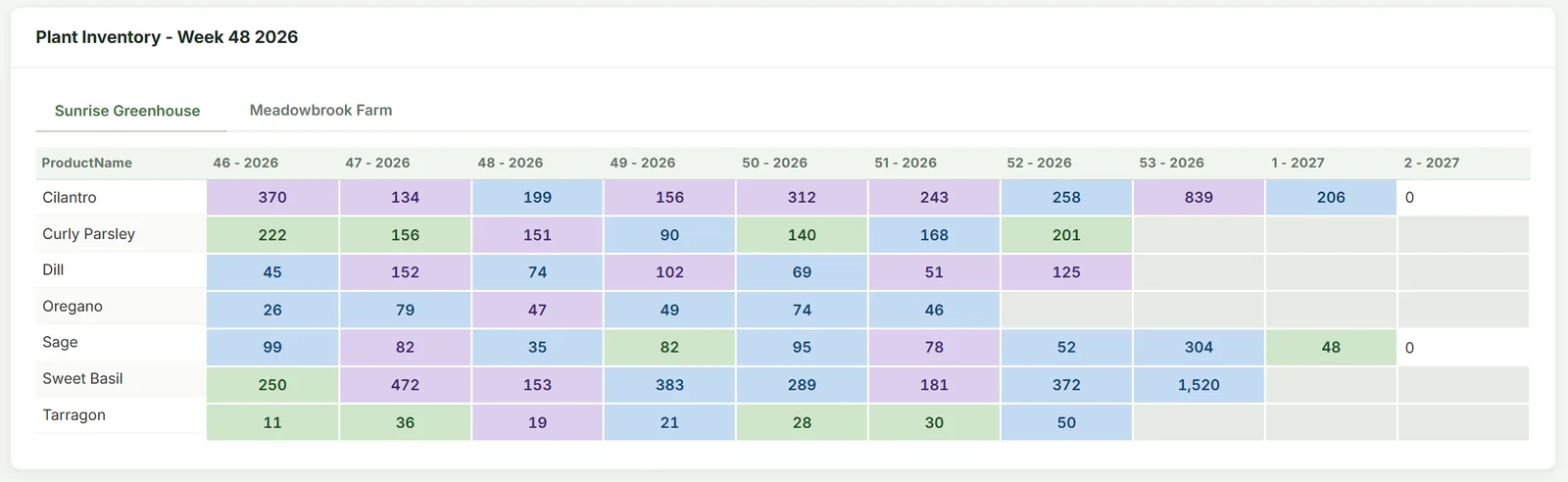
Planning production. An admin portal handles farm and sowing administration, spacing and transplant scheduling, cut-herb tracking and weekly plant inventory, so staff can see what has been sown, what is growing and what will be ready.
Importing sales and forecasting. A mailbox monitor watches the shared reporting mailbox for the daily call sheet emails, collects the CSV attachments and imports them with no re-keying. A forecasting engine works from weekly sales per farm and product and year-over-year trends, and allows for each crop’s sow-to-harvest time, since a three-week crop and a six-week crop need different forecasts.
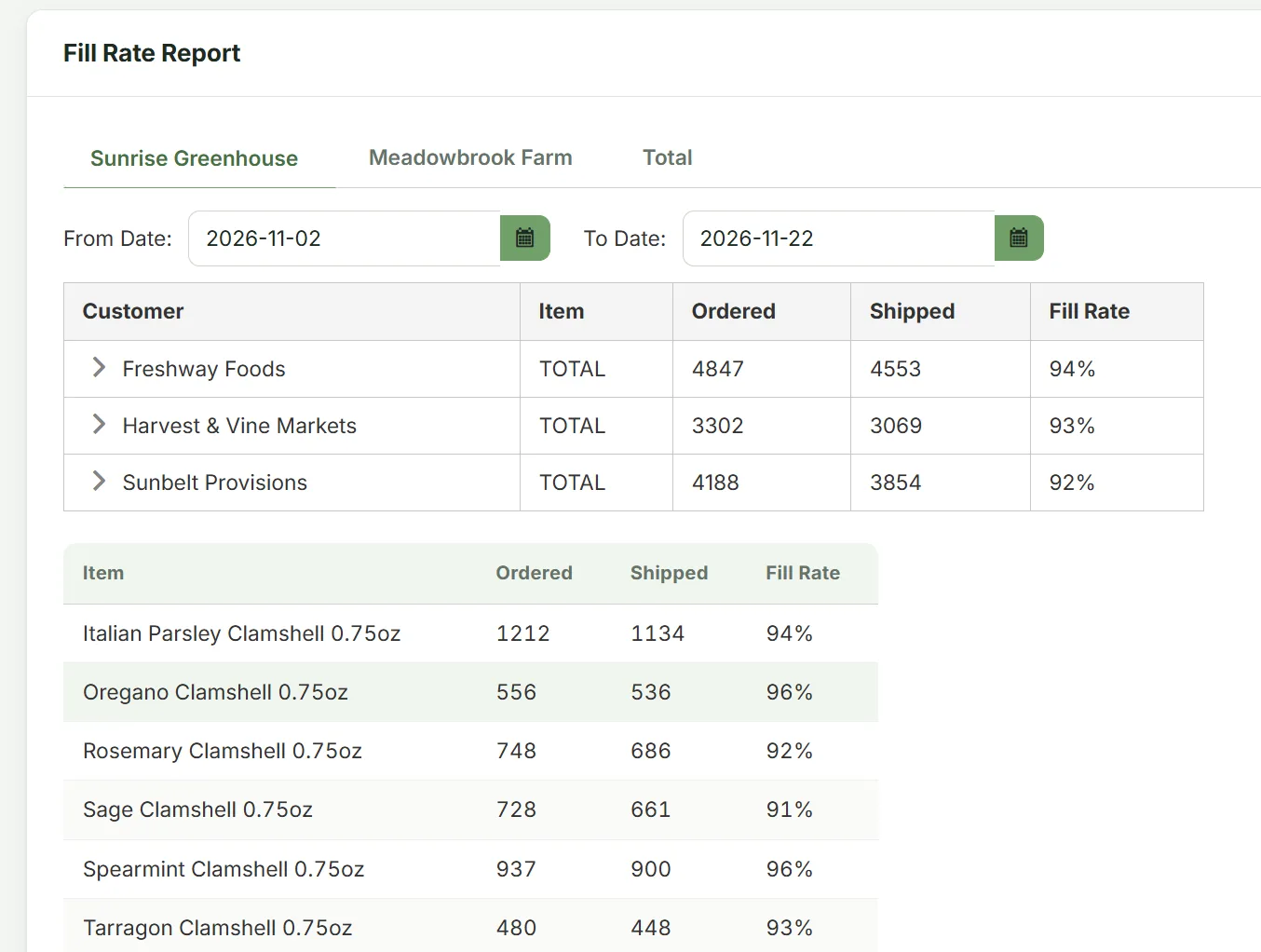
Reporting. Scheduled fill-rate reports go to retail accounts, including a dedicated report for the largest national grocery account. The portal also covers cost of goods, profit by customer and traceability.
Direct to store. Barcode and QR scanning handles purchase orders on direct-to-store routes.
A partner sales report
- Distribution partner emails the daily report
- Attachment picked up automatically
- Figures imported with no re-keying
- Forecast updated for each crop's growing time
- Fill-rate reports sent to retail accounts
A crop
- Sowing planned for the week
- Spacing and transplanting scheduled
- Stock tracked week by week
- Orders filled, direct to store or through distribution centres
Decisions and trade-offs
Import the emails that already arrive. The system reads the daily emails and attachments the business already receives, rather than waiting on a new data feed. It relies on those reports keeping a consistent format, and in return nobody retypes them.
Forecast crop by crop. One forecasting rule for everything would be simpler, but a three-week crop and a six-week crop need different forecasts. Each crop’s sow-to-harvest time is built in, so the forecast follows how the farm actually grows.
Add scanning as a reusable part. Barcode and QR scanning is a separate component that plugs into the existing portal, so direct-to-store routes gained it without a rebuild.
Grow with the business. Instead of one large delivery, the platform has been extended piece by piece as needs appeared, and every change is checked on a separate test copy before it goes live.
How we worked
The platform is maintained as an ongoing partnership. Each change is built, released to a separate test copy of the system, signed off by the client and only then released to the live system. Built with Angular, .NET and SQL Server.
A change request
- Change requested
- Change built
- Test copy updated
- Client signs off
- Live system updated
Outcome
Staff no longer retype partner sales emails: the data arrives in the system by itself. The business has a forecast that reflects how long each crop actually takes to grow, and regular reports reach retail accounts on schedule without anyone assembling them. The platform has run in production for years and continues to change as the business does.
Related service: Custom Software Development
Let's identify 3 processes worth automating.
Small jobs are welcome. Tell us where your team spends time on repetitive work.